Should Universities Open Their Gates? An Honest Look at the Global Reality
Every few months, the same argument resurfaces on Chinese social media: universities should open their campuses to the public. The comments divide predictably — one side says universities are public institutions funded by taxpayers and should not be gated; the other says safety comes first, and open access invites chaos.
A common narrative runs through these debates: American and European universities are open and welcoming; Chinese universities remain locked down since COVID, a symptom of systemic dysfunction. This narrative sounds reasonable, but it does not survive scrutiny.
Are Western Campuses Really That Open?
Let’s establish a basic fact first: most Western universities are not “open” in the way the narrative implies.
American universities underwent significant security tightening after 9/11. Campus access systems are widespread — student ID cards are required to enter dormitories and research buildings, certain areas are fenced and monitored, and visitors typically need pre-registration and temporary passes. Library access beyond common areas requires campus credentials. During holidays, some campuses restrict vehicle and pedestrian access at certain gates. Foreign visiting scholars go through formal approval processes. Describing American campuses as “open” is a romanticized simplification.
British universities present a different but often misunderstood picture. Oxford, Cambridge, and similar institutions are intertwined with their towns — student housing, libraries, and pubs are scattered through the city, so residents and students coexist on the same streets. But this reflects decentralized campus geography, not more permissive access policies. UK campuses have clear visitor management rules; research laboratories have strict card access; popular colleges limit visitor hours during peak tourist season.
Japanese universities often have stricter physical access controls than their Chinese counterparts. Students need ID cards to enter academic buildings, labs, and libraries. Outside visitors register at reception desks. Some national universities maintain separate registration systems for foreign nationals.
Singapore is similar. NUS operates a full visitor management system; certain facilities require advance applications to access.
The premise that “abroad is open, China is closed” simply does not hold. The real differences lie in the granularity and sophistication of access management, not in a binary open-versus-closed distinction.
After COVID, the Gap Is Smaller Than You Think
COVID is a useful reference point. During the pandemic, universities worldwide implemented closures or semi-closures. After it ended, different countries made different choices — but the differences are not as dramatic as some narratives suggest.
Chinese universities did retain some pandemic-era controls: appointment systems for outside visitors, health verification, and in some cases facial recognition. These measures were implemented rapidly between 2020 and 2022 and were not fully dismantled afterward.
But comparable Western practices often go unmentioned in these discussions. Oxford and Cambridge strengthened visitor appointment systems post-COVID. Several American universities increased security budgets and surveillance infrastructure while simultaneously maintaining open-campus branding. Australian universities introduced stricter security screening for certain international visitors after the pandemic.
These actions rarely receive attention in Chinese-language discussions because they do not fit the “open West, closed China” framework.
China: From Fully Open to Suddenly Restricted
Many people feel Chinese campuses have become “less open” — and that perception is accurate. But an important historical context is often missing: before COVID, Chinese universities were essentially fully open to visitors.
From the 2000s through 2019, the vast majority of Chinese universities had no visitor registration system, no gate turnstiles, and no appointment requirements. You could walk onto any campus freely, visit teaching buildings, eat in the campus cafeteria, and take friends on a campus tour — entirely normal behavior. The gates had security guards, but they rarely stopped anyone.
Then came COVID. Within just three to four years — roughly 2020 to 2023 — many Chinese universities introduced facial recognition, visitor appointment systems, and health verification infrastructure almost overnight. When the pandemic ended, much of this infrastructure stayed. Some measures became permanent institutional policies.
In contrast, Western university security tightened gradually over decades, not in a concentrated burst. American campuses began systematic security upgrades after 9/11; British universities tightened visitor policies incrementally over the 2010s. Each individual change was small enough to escape notice.
This is a critical difference in timeline: China went from near-zero access control to significant restrictions in a very short period. The West moved from moderate openness to gradually increasing controls over 20+ years.
A static comparison of China’s current gates against the West’s current gates — ignoring the fact that China was essentially wide open just five years ago — cannot establish that “China is more closed.” It only shows that China changed faster.
The real distinction: China’s tightening was sudden and concentrated at a single chokepoint (the campus gate). Western restrictions have been slow and distributed across individual buildings throughout campus.
What “Openness” Actually Means
Before debating whether campuses should be open, the term needs to be unpacked. There are at least three distinct dimensions:
- Physical access: Can a member of the public walk onto campus? This is the most visible and most debated layer.
- Academic access: Can outsiders audit lectures, use scholarly resources, or attend public events? The difference between Chinese and Western universities here is mainly in resources and format, not in whether such access exists.
- Governance access: Are students and faculty meaningfully involved in decisions about how the institution is run? This is the deepest and most consequential layer — and one where meaningful cross-national differences likely exist, though measuring them is complicated.
Most debates focus only on the first layer. But if the conversation never reaches the second and third layers — the structural differences in how access is managed — it misses the more consequential questions.
Conclusion
Whether a university gate should be open or closed is not a simple question with a clear answer. It involves the university as a social institution, the boundaries between safety and freedom, the tension between management efficiency and public participation — none of which reduce to “China’s system is the problem.”
Acknowledging that Western universities also have significant access controls does not make Chinese campus closures more defensible. But pretending the issue is simply about Chinese institutional dysfunction, without examining cultural traditions, governance patterns, and historical paths, is equally dishonest.
This topic deserves a more honest conversation.
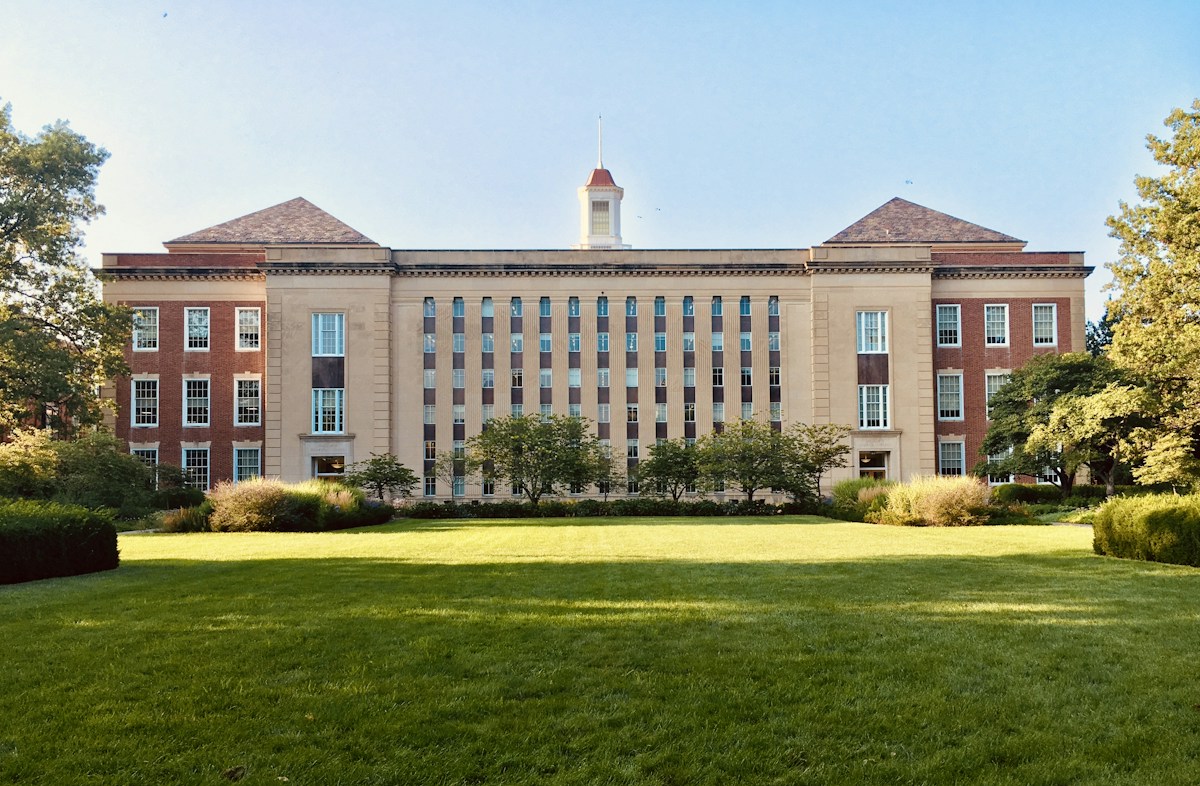
Cover image: University campus exterior — Unsplash Image Credit: Unsplash